Showing posts with label Cars. Show all posts

Street-Legal McLaren P1 LM Shatters Nurburgring Record With 6:43.2 Lap

Street-Legal McLaren P1 LM Shatters Nurburgring Record With 6:43.2 Lap

A Lanzante-modified, street-legal McLaren P1 LM driven by Indy 500 winner Kenny Brack just set a scorching 'Ring lap, deposing the Lamborghini Huracan Performante's record

Nurburging lap records continue to be smashed. The most recent record holder, the Lamborghini Huracan Performante, set a blistering 6:52.01 lap in March, deposing the street-legal record long held by the Porsche 918 Spyder. Now, there's a new king: The McLaren P1 LM, a track-only hypercar made street legal by aftermarket firm Lanzante Motorsport. With Indy 500 winner Kenny Brack behind the wheel, it beat the Performante's lap record by nearly nine seconds.


.

Of course, caveats apply. Lanzante isn't a car manufacturer in the same vein as Lamborghini, McLaren, or Porsche. The company took the track-only P1 GTR—which McLaren never officially timed at the 'Ring—and modified it to street-legal spec for a select group of buyers in the U.S., Japan, U.K., and the UAE. Previously, the Lanzante-modified P1 LM became the fastest street-legal car to climb the hill at the Goodwood Festival of Speed. With 986 horsepower from a twin-turbo V8 with hybrid assist, it's no surprise the thing is quick.

Lanzante promised to bring the P1 to the 'Ring to set a lap time, and now we've got video of the record-setting lap. It's astonishingly quick, riding on street-legal but custom made Pirelli Trofeo tires of "a specific size and compound." And while it's not quite apples-to-apples to compare an aftermarket-modified hypercar to a factory-stock production vehicle, one thing is for certain: This is one hell of a lap.

Perhaps it's more appropriate to compare the Lanzante-modified McLaren to the NIO EP9, an all-electric supercar that lapped the 'Ring in 6:45.9 (watch the video here). It's street-legal in Europe (but not the U.S.), though with only seven built so far and a price tag of nearly $1.5 million, it's not exactly a "production car." Still, Lanzante's McLaren beat the NIO by more than two seconds.

While Lanzante's effort was not officially backed by McLaren, this isn't the tuner's first time tracking one of the British automaker's vehicles: Lanzante campaigned the "semi-works" McLaren F1 GTR that won the 24 Hours of Le Mans in 1995.

As for the P1 LM's streetability? Lanzante says that, after the lap record was set, the car was driven all the way from the Nurburgring to the company's home in the U.K. Sadly, you probably won't be able to buy one for yourself: Only five examples were built, and they've all


Watch the BMW i8 Spyder Testing at the Nurburgring on an Open Track Day

Watch the BMW i8 Spyder Testing at the Nurburgring on an Open Track Day

We're not sure why BMW's engineers chose to go out and test a prototype during a public track day, but we're not complaining.


All the way back in 2012, BMW teased us with an open-top version of its then-new i8 hybrid concept car. Three years later, it was confirmed BMW would be bringing the i8 Spyder to production following the coupe's success. We've seen cleverly hidden test mules of the Spyder before, but this latest clip is our best look yet at BMW's flagship mid-engine convertible.

Spotted yesterday on the Nurburgring by YouTuber statesidesupercars, this camouflaged i8 test mule is very clearly sporting some sort of removable roof mechanism over the cockpit, highlighted by its contrasted flat black color to the rest of the car. Additionally, the bodywork over the engine bay is stylized to accommodate a convertible look—much like a Ferrari 488 Spider.

What's curious about this video is the time of day BMW chose to test its latest sports car on the 'Ring. Instead of running during normal work hours when the industry test pool is in session, the engineers decided to go out during later tourist hours, where the track is open to anyone. Strange, but not unheard of.

Watch for yourself as the i8 Spyder navigates its way through traffic as it tests on the Nurburgring.

Heres How Manual and Automatic Transmissions Really Work

Here's How Manual and Automatic Transmissions Really Work


If you're looking at the difference between an automatic and a manual transmission, it's not hard to understand that one shifts gears for you, and the other doesn't. Even the concept of shifting gears isn't hard to grasp. After all, if you've ever ridden a bike, you've had to do something similar.

But if you want to understand exactly how car transmissions work, that's a little more difficult. Unlike a bicycle, you can't easily see what's going on in either a manual or automatic. The video below, though, gives a pretty in-depth explanation of how each type of transmission works, making it much easier to understand the differences.

The narrator is a robot, and the cars shown at the beginning appear to be front-wheel-drive BMWs, which makes it a little weird. Still, the illustrations and explanations do a great job of making relatively complex concepts simple to understand.

As the G.I. Joe commercial used to say, now you know. And knowing is half the battle.


This Car May Be the Greatest Barn Find Ever

This Car May Be the Greatest Barn Find Ever

An as-new Isotta Fraschini that was possibly never driven? That's crazy.


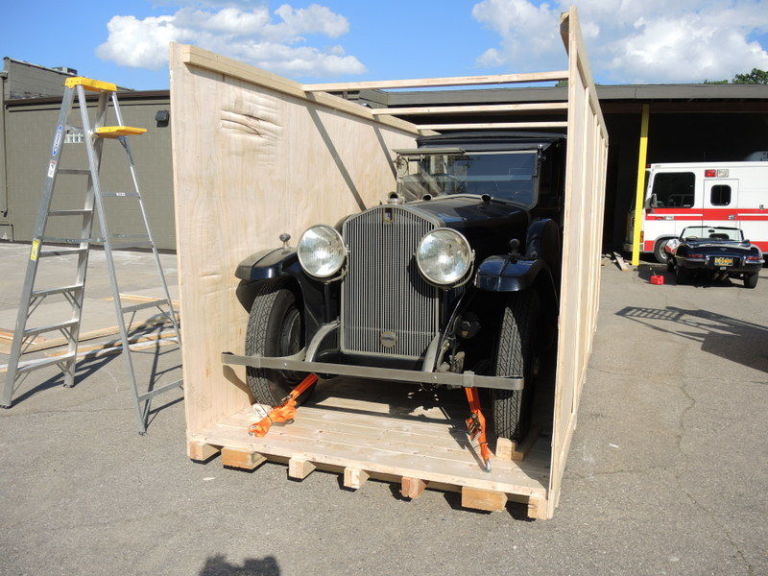
Earlier this year, a 1924 Isotta Fraschini Tipo 8A Landaulet crossed the auction block in Arizona and hammered for $434,500. This particular 1924 Isotta Fraschini spent the better part of the last century hidden. And, since the car is Italian, it is only fitting that it was, indeed, an Italian barn find. Well, it was a "warehouse" find but the cool part? This car may have never been officially delivered to a buyer by the factory, was preserved, and then put in storage for 90 years.

In fact, this beauty qualifies as one of the greatest "barn finds" ever. I've told you about Mark Lieberman and his business, Nostalgic Motors. If you don't remember, he bought a Tucker out of a barn last year. You'd think that would have been enough for Lieberman and he would have just coasted, resting on his laurels for the rest of the year. But he got word of another old car hidden away for decades, this time in Italy. He inquired about buying it and also researched the car's history to make sure it really was what it appeared to be. He negotiated the purchase and had the car crated up and flown to the US.


Research by the experts confirmed that this Isotta Fraschini is probably the first Tipo 8A–the company's flagship car–built. It was the product of two different coachbuilders which is also something quite remarkable. This particular car was ordered by a man named Filippo Bolzari of Milan but for reasons lost to history, he may never have taken delivery. The factory kept it and used it as a trainer for drivers who needed to learn how to pilot such a car. Not long after, the car was placed in storage away from the factory, which turned out to be a good thing. World War II saw the Isotta factory flattened, but it didn't kill the storage facility.

The car has a 110-HP engine with a little over 7-liter displacement from an inline 8-cylinder. The driver shifts a three-speed transmission and sits on the right-hand side. This car is huge: it has a 146 inch wheelbase. And the way you see it in the pictures is pretty much how it was found. The tires had been replaced about 35 years ago (while it sat in storage). The car had been maintained, service and repaired over the years by the caretakers. The fluids were changed out and the mechanicals were checked. And after perhaps 90 years in storage, the car runs and drives.

A walk around the car is not just lengthy; it is fun. The coach builders believed in nickel-plating almost everything. Exotic wood is used throughout. And the passenger can communicate with the driver by pressing buttons for "Left," "Right," "Fast," "Slow," and so on. The buttons are in Italian, of course, but you'd have plenty of time to figure it out as you sat in the back of this wonderful car.

Are there more barn finds out there? Obviously, yes. They can apparently be found in almost any corner of the globe. But ones like this are exceedingly rare, and all the more incredible each time they're discovered. 


Steve Lehto is a writer and attorney from Michigan. He specializes in Lemon Law and frequently writes about cars and the law. His most recent books include Preston Tucker and His Battle to Build the Car of Tomorrow, and Dodge Daytona and Plymouth Superbird: Design, Development, Production and Competition. He also has a podcast where he talks about these things.

How a Disconnecting Front Sway Bar Helps Your OffRoader

How a Disconnecting Front Sway Bar Helps Your OffRoader


Hardcore off-roaders know to disconnect their sway bars for better suspension articulation. But why does this trick work, and how?


Serious off-roaders tend to modify their rigs in the exact opposite way you'd spec out a high-performance car. Tires get bigger; suspensions get taller; springs get softer. And more often than not, a solid-axle 4x4's sway bars get disconnected, either at the head of the trail or permanently. It sounds backwards if you're thinking in terms of cornering g loads or lap times, but it's an easy trick to make your hardcore truck or SUV more capable off-road.


It's become such a common trick that Ram has incorporated an electronic front sway bar disconnect on every generation of the modern Power Wagon, a 2500-based off-road pickup with all the goodies you'd add to a regular 2500 to make it more rock-crawl capable, straight from the factory.

But why does disconnecting your front sway bar lead to better suspension articulation, and thus, more off-road capability? And how does that electronic disconnect mechanism work to give you predictable, controlled handling on the pavement, and improved suspension flex in the dirt?

Our pal Jason Fenske, host of the excellent YouTube series Engineering Explained, is here to show you just how that electronic sway bar disconnect works, and why it leads to enhanced off-road capabilities in a 4x4


How to Find the Proper Seat Position For Street, Track, and Rally Driving

How to Find the Proper Seat Position For Street, Track, and Rally Driving

The ideal driver's seat position is crucial for improving your high-performance driving. Here's how to find the perfect position in any car.


You look at a vintage photo like this, and you wonder how anyone could drive such a cramped car. Driver TB Andre is positively wedged into his seat at the wheel of his Marlborough I, preparing for the JCC 200 Mile Race at Brooklands back in 1921. It makes you thankful for the roominess of a modern car, where you can roll the seat rearward, recline the seatback, and really stretch out those legs on a long highway journey.

But if you're about to hit the track, or participate in a rally stage, autocross, or even some high-performance back road driving, you'll want to adjust your seat to be more in line with Mr. Andre's angles.

The theory is well known to experienced track day drivers, but it's worth reiterating to everyone. The proper high-performance seating position boils down to one main theory: You want to be able to easily operate your foot and hand controls to their maximum, without having to reach, push, yank, or invoke your major muscle groups. You should be able to control your car with fingertip steering inputs and subtle foot pressure—even under massive acceleration, threshold braking, or major cornering forces.

Theoretically, that all makes sense. But how do you tailor this general advice to the specific car you're driving? Allow Wyatt Knox, an instructor at Team O'Neil Rally School, to explain the ins and outs of achieving the proper driving position for street, track, and rally driving for maximum comfort, endurance, and control.


The R34 Skyline GT-R More Than Lives up to the Hype


The R34 Skyline GT-R More Than Lives up to the Hype

We can't wait to import these.


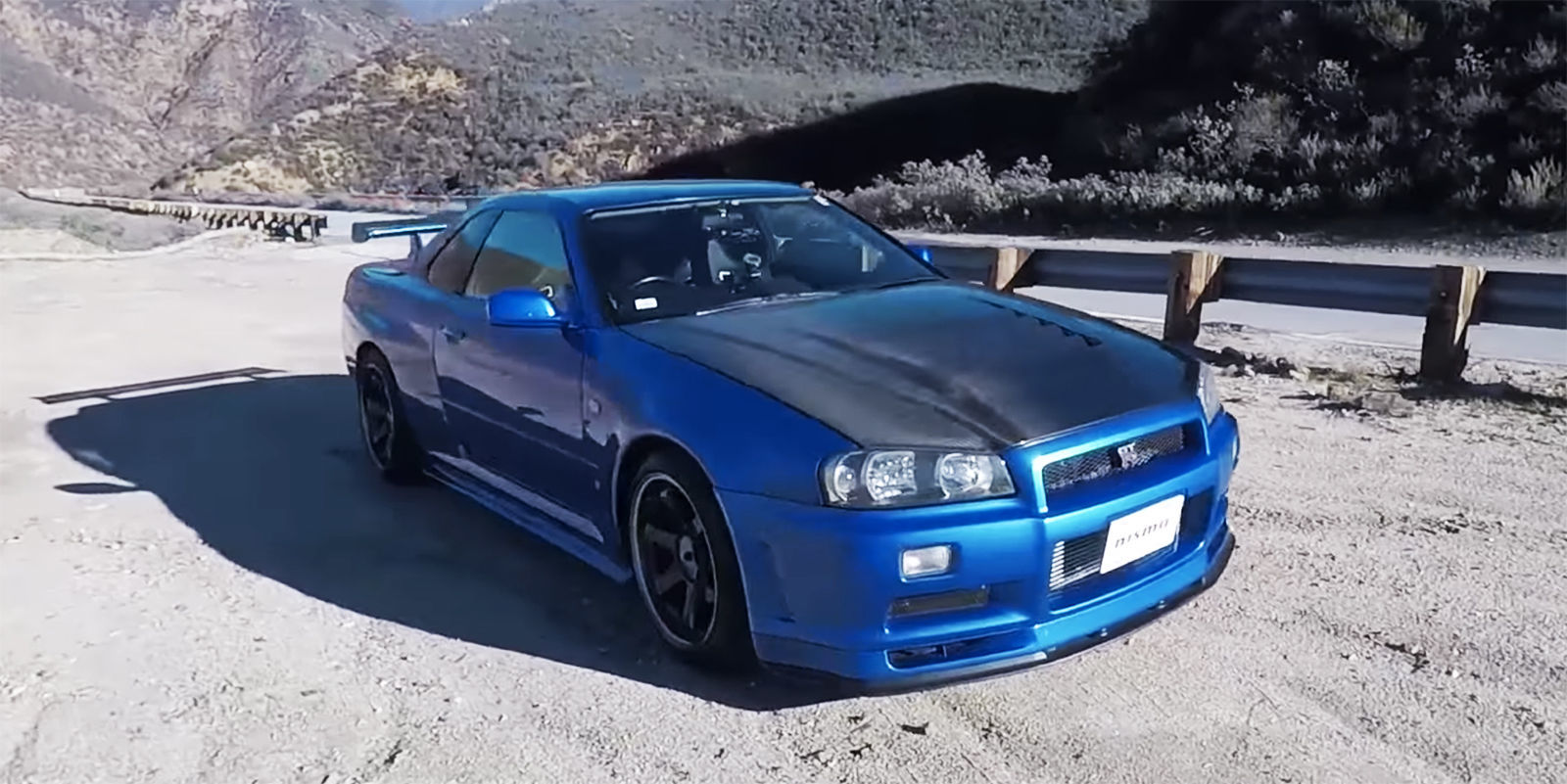
Of all the performance cars not sold in the US, none quite capture the imagination like the Nissan Skyline GT-R. Especially the final iteration, the R34. But, with any "forbidden fruit" car, there's always a chance that it doesn't live up to the hype. That it isn't as good as Gran Turismo made it out to be.
Not with the R34, as The Smoking Tire's Matt Farah found out with this 2001 example. With some fairly mild engine and suspension modifications, it's genuinely quick and handles beautifully.
Many Skyline GT-Rs have their four-wheel steering systems disabled, but this one doesn't, giving it super sharp turn-in. This GT-R also has extra stiff aftermarket coilovers, aiding handling at the expense of any semblance of ride comfort.
So, after watching this, you probably want to import your own R34. Unfortunately, you'll have to wait until 2024, when the first R34s are eligible to enter the US under the DOT's 25-year rule. This GT-R is said to be from Canada (where you can import any car over 15 years old), though a quick look at the owner's Instagram indicates it spends most of its time in the US. We're not sure how this works, either.
If you want to keep everything kosher, you can at least get an R32 GT-R now.

Lucid Motors Just Hit 217

Lucid Motors Just Hit 217MPH In Its Electric Sedan


Mighty impressive for a company hardly anyone knew about until last year.
When we spoke with Lucid Motors chief engineer Peter Rawlinson last month, he told us the company's first car, the Air, would be fast. Like, well over 200 mph fast. Today, Lucid showed off a video of an Air prototype hitting 217 mph on a high-speed banked circuit. Damn.

That puts the Air among the fastest electric cars in the word, like the Rimac Concept One and the NextEV NIO EP9. Heck, that's one mph faster than the new Ford GT. That said, it's worth noting that this isn't a proper top-speed test, since top speed is a calculated average of a car running in opposite directions to mitigate wind resistance.
Still, this is seriously impressive performance from a company that few people knew about until last year. It comes courtesy of a 1000-hp electric drivetrain with motors on both the front and rear axles. Rawlinson told us the Air hits 60 mph in 2.5 seconds, which isn't quite as quick as the quickest Tesla Model S, but then again, the Model S isn't a 200-plus-mph car.
More importantly, Rawlinson maintains that the Air will be a true driver's car. We're inclined to believe him because he previously worked as the chief engineer at Lotus, and his personal car is a 1967 Elan.
We can't wait to drive this.

The Two Poles of Cold Weather Prototype Testing

The Two Poles of Cold Weather Prototype Testing

The Mercedes GLC63 Is the Practical AMG Americans Get Instead of the C63 Estate

The Mercedes GLC63 Is the Practical AMG Americans Get Instead of the C63Estate.


Americans don't want wagons, but we have a feeling the U.S. will fall in love with this twin-turbo V8 crossover.


Despite Porsche's stunning new U.S.-bound Panamera Sport Turismo Wagon, we have a feeling America will not fall in love performance wagons any time soon. Mercedes knows this, which is why it finally dropped its twin-turbo 4.0-liter V8 into the mid-level GLC crossover. The result is a small SUV with enough power to smoke pretty much any other practical car on the market.
The GLC63 AMG is Mercedes's a a practical performance car for the American market. Our love for crossovers—along with our disdain for wagons—meant the German automaker couldn't just bring the AMG C63 Estate to the States and call it a day.
Sold in crossover and "Coupe" body styles, the 469-horsepower GLC63 is equipped with the same nifty torque-vectoring all-wheel-drive system from the new E63 AMG. It doesn't have the E63's drift mode, but it does include Mercedes's new nine-speed automatic transmission. All of that together means a 0-60 time of 3.9 seconds.

Additionally, GLC63 AMG Coupe is offered in a 503-horsepower S trim, just like the C63 AMG S. With the S package equipped, the GLC63 Coupe's 0-60 time drops to just 3.7 seconds.
Judging by the Launch Edition Coupe shown above, it looks like Mercedes will equip the GLC63 with Michelin's brand new Pilot Sport 4S summer tires—perfect for those high-speed grocery runs.

Mercedes says North America is AMG's biggest market, and judging by our growing love of crossovers, we have a feeling the GLC63 will be a hit
Expect to see them on the road by the end of this year.
excerpt to R&T

In Praise of Power and Capability You ll Never Use

In Praise of Power and Capability You'll Never Use

God bless the Dodge Demon.


Back in 1974, Lieutenant Hiroo Onoda of the Imperial Japanese Army came out of his mountain retreat, accepted the Emperor's surrender to the United States, and was formally relieved of duty by his superior officer—nearly 30 years after the end of World War II. It is possible, although unlikely, that there are other Japanese holdouts on the minor islands scattered across the Pacific Ocean. If that is the case, they will probably surrender shortly, because they, like the rest of us, have been carpet-bombed into submission by all of the publicity regarding the recently-released Dodge Demon and its 9.65-second quarter-mile time.

They are talking about the Demon in the frozen tundra of Siberia, across the barren wastelands of the Outback. Right now, there are two tribesmen in the Amazon rainforest who have never seen so much as a bicycle, and they are arguing about whether or not the two-step launch RPM in the Demon should be set for DOT drag radials or Mickey Thompson slicks. An alien spacecraft that had just passed Mars on its way to utterly subjugate the people of Earth is waiting anxiously at a Lagrange point to find out when the first Demon will appear on the "wrecked exotics" websites.

There's been so much discussion about the big Dodge that some people, mostly young men with fiber-optic connections to the Internet and jobs working the night shift in fast-food restaurants, have been hospitalized with "Demon anxiety," defined as fear of being the last person in one's social group to actually see the mighty 840-horsepower coupe lift its front wheels in anger. Hundreds of ad-hoc emergency 12-step groups have been formed to help Hellcat owners cope with their agitation over the fact of the Demon's existence. Many of them are already in the fourth stage of grief, which is "bargaining" with their local tune shop for a new supercharger and some dyno time with which to test it.


Sources from General Motors are already attempting to remind everybody that the Camaro ZL1 is almost certainly much faster around a racetrack than a Demon. These efforts are doomed to fail. Look for the ZL1 to be discontinued immediately, followed by the termination of the Camaro production as President Trump forces GM to use the facility for additional Demon production the same way FDR compelled Ford to build the Willys "Jeep" during World War II.

There will be a Demon around every corner. The press kits have cleared the thousand-dollar mark on eBay and they can only go up from there. An entire generation of portly, sweat-stained journalists has already used their press kits as collateral on gambling debts, lines of credit, child-support obligations. Counterfeit Demon hats now outnumber real Demon hats a hundred to one. A cottage industry of verification experts has sprung up overnight. They tell us that there is a missing stitch in the logo of the genuine hat. Three hours ago, the factory in China that makes the fake hats started leaving out that stitch as well. Radiation dating is now your only sure way to tell. The test process destroys the hat and can be fatal to anyone in the vicinity. The Herald-Post-Intelligencer of Milltownville Indiana regrets to inform its readers that both of its "Wheels" reporters died today of radiation poisoning.


Tesla charges ahead to overtake Ford in market value

Tesla charges ahead to overtake Ford in market value

Elon Musk’s electric car company has been valued at $49bn, leaving the 100-year-old motor manufacturer lagging behind


One is an automotive titan that has built more than 350m vehicles in an illustrious history spanning more than a century.
The other is less than 15 years old and has never made a profit.
And yet a 7% surge in the value of shares in electric car firm Tesla on Monday saw it zoom ahead of Ford Motor Company, in terms of its stock market value.
As Wall Street closed for the day, Tesla, led by 45-year-old tycoon and futurist Elon Musk, was worth $49bn (£38bn), compared with a paltry $46bn for the empire built by Henry Ford.
This astonishing overtaking manoeuvre says as much about the nature of stock markets as it does about these two very different carmakers.
The old cliche among stock market investors is that you should “buy on the rumour, sell on the fact” – the idea that investment is more about what you expect to happen in the future than the current state of play.
And Tesla, investors believe, is the standard-bearer of a battery-powered future – while Ford is the archetypal mass-production legacy car business.
Based in the Californian tech hub of Palo Alto, Tesla delivered 76,230 cars last year – a fraction of Ford’s 6.65m.
It made sales of $7bn but a loss of $746m, while Ford recorded a $10.4bn profit after racking up sales of $152bn.
But fresh figures published this week, which cover the most recent three months, showed 70% growth in sales at Tesla, with 25,000 electric vehicles rolling noiselessly into the garages of their new owners.


That sort of growth rate is what sent investors piling into Tesla shares, expecting a continued global push for greener cars to be the catalyst for converting notional value into concrete returns.

And if Musk is to to be believed, Tesla won’t be slowing down any time soon.
The firm’s production targets are unprecedented in the automotive industry. Tesla has set a goal of building 500,000 cars in 2018 and Musk has even raised the prospect of doubling that to 1m by 2020.

Despite the setback of a fatal crash last year, when a Tesla on autopilot failed to tell the difference between the side of a white lorry and a bright sky, the company continues to make strides towards a fully driverless car.

Its new Model 3, slated for production this year, is intended to offer a more affordable version of previous models, with a price tag around $35,000.

If successful – and it is being seen as a litmus test of the prospects for electric cars – the Model 3 could supercharge Tesla’s growth by muscling in on the territory of mass market rivals.

The firm also has a potentially lucrative sideline in storage batteries for the home. The Powerwall is intended to allow homes to store solar power, and Tesla is also due to start installing its first solar roof tiles this year.

Tesla may be on a charge, but Ford is in particularly bad shape. It remains in the world’s top 10 auto firms and is also among the US “Big Three” alongside General Motors and Chrysler. But while Tesla’s sales are soaring, the 6.65m vehicles that Ford sold last year were just 16,000 up on 2015 sales. In the most recent quarterly update from Ford, sales actually fell.

The company that helped to build Detroit, often known as Motor City, sold 1.7m cars in the quarter, about 68,000 fewer than in the same period the previous year.
Musk was in the mood to gloat about Tesla’s comparatively rapid growth story.
“Stormy weather in Shortville,” he tweeted, a reference to traders who had been burned by “shorting” Tesla – betting its results would disappoint and its shares would fall.

excerpt to theguardian