Showing posts with label Technology. Show all posts

Guide to the games of 2017

Guide to the games of 2017

Browse our massive list of the PC games coming out this year.


ast year saw an incredible number of games release on Steam and elsewhere, and in 2017, a new game will probably come out every time you blink. To map out what to look forward to this year, we've collected a giant list of games scheduled for 2017 releases. Buckle in, there's a lot to cover.

We'll update this post throughout the year to keep up with new announcements and game releases.

Table of contents

Action and FPS
Action and FPS (cont.)
2D action
Fighting and brawlers
RPGs
MMOs
Exploration and survival
Strategy and sims
Platforming and puzzle
Adventure games
Sports and racing games


Ghost Recon: Wildlands


Release date: March 7, 2017

Developer: Ubisoft Paris


Take a big open world, stuff it with 100 Far Cry-type outpost missions, and jump in with some co-op partners. Ghost Recon: Wildlands takes place in a Bolivian landmass where four players comprise a military taskforce sent to disrupt a drug cartel and the government it’s aligned with. While players may have a specific missions—whether it’s to steal some intel or kidnap an informant—how they choose to tackle it is up to them. Guns blazing? Stealth? Or, as often happens, failed stealth that leads to guns blazing?

The open world—the first in Ghost Recon’s ten-game history—promises diverse environments like mountains, forests, and deserts, explorable by ground vehicles, helicopters, and parachutes. The setting is close to modern day, so weapons and gear aren’t as futuristic as they have been in earlier Recon games. 

We gave Wildlands a go during the closed beta, and had a pretty good time. It was mostly antics, though.


Prey


Release date: 2017
Developer: Arkane

New Prey has nothing to do with the old Prey, or Prey 2, which was cancelled back in 2014. Now in the hands of Arkane’s Austin studio, Prey is only familiar in name. Set in an alternate history where President Kennedy was never assassinated, the Soviets and the States continued their rivalry, until one took control of the Kletka Program, a space installation meant to control an alien threat. The project is eventually abandoned, and a corporation takes over (uh-oh), turning the station into “a cutting edge innovation center” called Talos 1. Big surprise, things don’t go well.

You play as Morgan Yu (with a gender of your choice), who happens to be on board when the alien threat gets particularly threatening. From there, it’s a matter of survival and getting to the bottom of what went wrong. Expect plenty of shooting and exploration, and most interestingly, shape-shifting. You and the alien threat can take on nearly any form. An inconspicuous mug or trash bin might be an alien in wait, or if they’re hunting you down, try the mug life for 


Red Dead Redemption 2


Release date: Fall 2017
Developer: Rockstar Studios


Rockstar has done it again: announced a highly-anticipated game without mentioning whether or not it will come to PC. The original Red Dead Redemption never came to PC, but this feels more like a repeat of GTA V than that.

Assuming we’re right, we seem to be looking at a Magnificent Seven approach to the western—or at least, there are seven riders conspicuously featured in the debut teaser. Rockstar is also touting multiplayer, which will presumably look something like GTA Online, but with people running you over with trains instead of cars.


Rising Storm 2: Vietnam


Release date: 2017
Developer: Tripwire

We loved the asymmetry of Rising Storm, the authenticity-focused WWII shooter we named our Multiplayer Game of the Year in 2013, and it's even more dramatic in the Vietnam-set sequel. The Americans are loud and fast, skimming the treetops with helicopters, while the Viet Cong spawn in squad tunnels, appearing behind capture points and ambushing LZs. More than being a good shot, strictly managed teamwork remains the key to success. Tyler tried his hand at both piloting helicopters and manning their guns, and found it nigh on impossible to hit anything without spotters and direction over comms.

The addition of modern, automatic weapons might be an even bigger shift for the series than helicopters, though, as part of the Red Orchestra and Rising Storm identity has been their demand for precision aiming with bolt-action and semi-auto weapons. But the quest for authenticity hasn’t changed here. Rising Storm 2: Vietnam’s guns aren’t easy to handle by any means, and scoring kills still sometimes means picking out specks on the horizon and taking cautious, well-planned shots. Read more about Vietnam’s helicopters, guns, and new


Resident Evil 7: Biohazard


Release date: January 24, 2017 (Out now)
Developer: Capcom

The spooks came early in 2017, with a first-person Resident Evil that we loved. "It’s a return to the atmospheric, slow-burning horror of the original, with a few nods to contemporary games like Alien: Isolation and Amnesia," wrote Andy in our review. Later, he elaborated on how the game saved a troubled series. 

Needless to say, Andy's a fan, as is the rest of PC Gamer. James also tried RE7 on PSVR and lamented the exclusivity deal that's currently preventing us from such a good (horrifying) VR experience on PC. It's a damn shame, as he said, but otherwise the PC version is in good shape—outside of its 90 fps cap and lack of ultrawide support.


Bulletstorm: Full Clip Edition


Release date: April 7, 2017
Developer: People Can Fly

A remaster of a wildly over-the-top, inventive FPS that asks you to electro-whip enemies into spike traps and explosions and your big-ass boot as often as you shoot them. It's still a blast if you missed it the first time around. The old version's cheap on Steam, while the new Full Clip edition includes remastered graphics and audio, a campaign mode that gives you every weapon from the start, and more levels for the score attack Echo mode. Oh, and you can play the whole campaign as Duke Nukem, with new dialogue that probably includes a lot of cuss words.


Sea of Thieves


Release date: 2017
Developer: Rare

Rare's ambitious pirating MMO adventure (or, more accurately, massively co-op adventure) aims to let you do whatever you'd expect from the pirate life alongside a crew of your best mateys. That means searching for treasure, drinking grog, sailing, and fighting ship battles against other pirate crews, but Rare still seems to be working out the exact scope of your activities and how this living pirate world will work. The most interesting choice is the bold lack of UI. You'll find almost no sign of reticles or health bars or maps or any of the usual clutter in Sea of Thieves.


Friday the 13th: The Game 


Release date: Spring 2017
Developer: Gun Media

Delayed a few months so the devs could include a single-player mode with bots, this asymmetrical multiplayer game pits one player—as the unstoppable movie slasher Jason Voorhees—against the rest, who play as campers at Crystal Lake, the one place everyone should know by now is not a great place to camp. Jason will enjoy all manner of brutal means to dispatch his prey, be it smashing their faces into a tree, impaling them on spikes, or just going hog-wild with a machete. Campers won’t be entirely helpless, however, and we’re promised that by working together it is in fact possible not to simply elude and survive, but to 


Sniper Elite 4


Release date: February 14, 2017
Developer: Rebellion Developments

If you don’t have a date for Valentine’s Day, no worries: you can spend your the romantic holiday shooting Nazis in the nuts. We got a look at Sniper Elite 4 during 2016’s GDC, and the World War II third-person sandbox shooter featured stealth, melee kills, and a whole lot of disturbingly graphic slow-motion x-ray sniper shots the series is famous for. The maps look impressively large this time around, with its smallest still three times bigger than any map from the previous game.


Strafe


Release date: Early 2017
Developer: Pixel Titans

Strafe is a deliberately antiquated FPS, borrowing from the bread and butter simplicity of Quake’s breakneck template. It’s not just a nostalgia trip, though: Strafe is also pulls from Rogue. That genre’s interminable revival is starting to grate on a lot of people, but if Pixel Titans manages to achieve the fluidity of the ye olde shooters, playing this over and over again will be a joy. Plus, it’s genuinely funny and, with its rough 1990s aesthetic, quite beautiful too, if you came up during that era.


Dusk


Release date: 2017
Developer: David Szymanski

An ode to southern gothic horror and Quake-era FPS design, Dusk is aiming for the low-poly scares and hectic precision shooter action a good chunk of PC gamers grew up on. So far, it’s pitch perfect, throwing chainsaw-wielding maniacs, witches, and all sorts of occult enemies your way in massive levels hiding secrets rooms, weapons, and bosses in every corner.


Metal Gear Survive


Release date: 2017
Developer: Konami

A four-player co-op stealth game with zombies that is also Metal Gear? Well, OK. We expected things would change at Konami post-Kojima, and this is certainly a change. After being sucked out of Mother Base by a rogue wormhole, you wake up in an alien landscape that looks suspiciously like the Middle East, and must battle hordes of the undead with your fellow grunts. There’s plenty of MGS 5-style stealth, fulton devices, and both base infiltration and defense in the 15 minutes of gameplay you can see below.

Desync


Release date: Early 2017
Developer: The Foregone Syndicate

Coated in the neon colour schemes of 1980s cyberpunk, Desync is among the most visually striking shooters you’re likely to see in 2017. Developed by Melbourne studio The Foregone Syndicate, Desync is a precision-oriented twitch shooter with a focus on performative gameplay: basically, it rewards you for pulling off kills in the most spectacular ways possible. The studio is also working on a bafflingly granular leaderboard system, incentivising stylish play. If you can imagine a strange meeting of Hotline Miami, Lovely Planet, and Quake, you’re close to how Desync plays out.

.

Morrowind system requirements

Morrowind system requirements


In his early hands-on last week, Leif Johnson told us The Elder Scrolls Online nails the magic and weirdness of Morrowind—but can your PC handle a revamped return to Ald Velothi, Molag Mar, Balmora and beyond? 

ZeniMax Online Studios can now help you answer that question, having revealed the minimum and recommended system requirements needed to revisit the land first conceived some 15 years ago. 

"With The Elder Scrolls Online: Morrowind launching in just a few weeks, we want to make sure you'll be ready to dive straight into the action," says ZeniMax on the game's official website. "Below you'll find the minimum and recommended system requirements to play on PC and Mac. Please note that we aren't changing any of the requirements at this time from what's currently needed, but merely clarifying exactly what's necessary to play."

For PC players, you're looking at the following:

Minimum

Windows 7 32-bit
Intel Core i3 540 or AMD A6-3620
3GB System RAM
85GB free HDD space
DirectX 11 compliant video card with 1 GB of RAM (NVIDIA GeForce 460/AMD Radeon 6850) or higher
DirectX compatible sound card
Internet broadband connection
Recommended

Windows 7 64-bit
Intel Core i5 2300 or AMD FX4350
8GB System RAM
85GB free HDD space
DirectX 11 compliant video card with 2 GB of RAM (NVIDIA GeForce GTX 750 or AMD Radeon HD 7850) or higher
And for the Mac users among us, you'll want to come equipped with:

Minimum 

OS X 10.9
Intel Core i3 540 or higher
4 GB System RAM
85 GB free HDD space
AMD Radeon 5870 (1GB of VRAM) with OpenGL 4.1
Internet broadband connection
Recommended

OS X 10.11
Intel Core i5 2500S or higher
8 GB System RAM
85 GB free HDD space
AMD Radeon HD 7870 or higher with OpenGL 4.1

Google Mo Gawdat Happiness is like keeping fit You have to work out

Google’s Mo Gawdat: ‘Happiness is like keeping fit. You have to work out’

When the tech guru’s son unexpectedly died, he turned to an equation they had devised together to get through the grief

Mo Gawdat: ‘You don’t have to obey your thoughts. I can accept them, I can reject them, I can ask the brain to go and get a better one.’

o Gawdat is the chief business officer at Google X – the “moonshot factory” responsible for some of the company’s more audacious projects, such as self-driving cars and a balloon-powered global internet. Before he joined Google, while working as stock trader and tech executive in Dubai and in response to a period of depression, he used his engineer’s mindset to create an “equation for happiness”. The equation says that happiness is greater than, or equal to, your perception of the events in your life minus your expectation of how life should be.
When his 21-year-old son Ali died during a routine operation, Gawdat turned to the equation, which they had worked on together, in an attempt to come to terms with his tragic loss. Gawdat’s book, Solve for Happy, explains the theories underpinning the equation and how it helped him sustain his life after Ali’s death.
To an outsider you were a successful, wealthy individual with a loving family; not an obvious candidate for someone who felt the need to devote themselves to developing a theory of happiness. You say the more money you had, the less happy you became. 
That is correct and it’s not uncommon among many of my successful and wealthy friends. The scientific research will tell you that the more income you get the more happy you will become, but once you get to average income your happiness plateaus. Moreover, I found that when you go even higher, wealth starts to work against you – people start to treat you differently; you start to feel a constant disappointment.
You mention that while you were on the “hedonistic treadmill” you bought two Rolls-Royces online on a whim.
That truly was a turning point. This was again the attempt to fill that gap in my soul. When they arrived I was completely disappointed, they were pretty, I sat in them for 20 minutes but then I went back to my unhappy thoughts, and once you go back to the things that make you unhappy it doesn’t matter what’s parked in the garage. That was a turning point, that nothing material will solve this stuff.
Do you still have them?
I’ve been trying to sell them, I’ve tried giving them to charity. They are in showrooms waiting to be sold. I rent cars now.
You weren’t able to find joy in your life. Is finding joy a skill that should be taught?
Absolutely. Happiness is very much like staying fit. You start with the decision that you are going to get fit, you find out how – but knowing that is not enough, you have to go to the gym to work out and eat healthily. To me the whole topic of happiness is exactly the same. First you understand that happiness is a choice, that you can actually achieve it and that there is a method to make it happen. Happiness is not a coincidence, it is not given to you by life, it’s entirely our responsibility.
When your son died, did you feel like jettisoning your theories? Are you surprised that your equation held up in such tragic circumstances?
You know how there are five stages of grief? We started with acceptance. My wife at the time made an insightful comment when they asked to do an autopsy on Ali’s body: “Will it bring Ali back?” The realisation that nothing we could do, including crying in our rooms for the next 17 years, would ever bring him back… we started from there.
I then went through a rollercoaster. But I would sometimes imagine talking to Ali and if you knew him, his first reaction would be: “Papa I’ve already died, there’s nothing you can do about it, so what are you going to make out of it?” When I started going through this dialogue it made me realise that this can be for a reason, for good can come out of it.
Do you ever wonder how you would have responded to your son’s death if you hadn’t developed your happiness equation?
I would have definitely left life, I wouldn’t have killed myself, but I would have found a corner somewhere and shut the door and sat there until they came. Ali was not just my son, he was my mentor, best friend, confidante, my teacher, he truly was “it”, basically. I can’t imagine I would have handled it at all without the model we built together.
You talk about how happiness is a human’s default state. Where’s your evidence for this?
That was one of the eye-openers for me. The first observation was I was a very happy young man until around 25, and then something went wrong, and I became very unhappy. To me, an engineer, that means you have a highly optimised machine that began to misbehave. So I started to go back to all the points where I was happy. If you go back to childhood, you observe that if a child’s basic needs are met their default state is happy – they don’t need an iPhone, they can play with their toes and be happy.
You say that the voice inside your head isn’t you. If we aren’t the voices inside our heads, what are we?
We have a set of illusions. One of them is that we associate so strongly with the voice in our head when the reality is that it is just a biological function; it is exactly like your heart pumping blood around your body. It’s your brain’s way of delivering survival functions to you – its job is to scan the world around it using sensory input and then coordinate your muscle responses and take action so that you survive.
Thoughts have truly propelled our civilisation, and we think of the voice inside our heads as us. But that isn’t remotely true once you realise that you don’t have to obey your thoughts – I can accept them, I can reject them, I can ask the brain to go and get me a better one. You can do what people do in meetings: you ask me a question, I give you an answer, but you can say to me: “Mo, can you get me a better answer?”, and I go back to my brain and I say, give me a better answer. Treat your brain as a biological function and understand he is not the boss – you are the boss.
Can you explain what you mean by the illusion of time?
We deal with time every day, yet no one really knows what time is, including the master of the science of time Albert Einstein. He’ll tell you that past, present and future is nothing more than a stubborn persistent illusion. We have created machines that measure mechanical movement in such a way, yet we have no idea what it is that we are measuring and we are very happy to torture ourselves with it.
If you ask a Buddhist what time it is, their answer will be “the time is now”. Like a Buddhist, the only time you have ever lived is a moment of now. You’ve never lived in the past, you will never live in the future; when the future comes it will be a moment of now. Yet we never give ourselves the luxury of living in now; instead, we are constantly living inside our heads looking in the past and the future, and as you do that you constantly suffer.
Could you turn your equation into an app?
Absolutely. I believe that the book is just the start of a very big initiative. I am trying to create a movement that doesn’t depend on me or the book. I’ve set myself a target of 10 million people happy, and I’m hoping that everyone will set themselves a target of 25 people or 25 million happy, depending on their reach. I’m not about selling books, I believe I’ve been paid by life already.
In what sense was your quest to develop an equation for happiness informed by Google X’s moonshot philosophy, to set audacious rather than incremental goals?
Absolutely, our CEO Larry Page teaches us to set an audacious target but while you may miss it, what you achieve is greater than if you set a low target.
You are on a sabbatical from X?
I have a tremendous respect for a company that does things that make the world a better place. Although public opinion sometimes attacks Google, imagine a life without search. I am one of the top execs in Google and I can tell you it is truly not a place about the money, this is a place that is truly about changing the world.
When you go back to X what will you be working on?
I can tell you but then I’d have to flash you like the Men in Black.
 Solve for Happy  by Mo Gawdat is published by Bluebird (£14.99). To order a copy for £10.49 go to bookshop.theguardian.com or call 0330 333 6846. Free UK p&p over £10, online orders only. Phone orders min p&p of £1.99

How to Find the Proper Seat Position For Street, Track, and Rally Driving

How to Find the Proper Seat Position For Street, Track, and Rally Driving

The ideal driver's seat position is crucial for improving your high-performance driving. Here's how to find the perfect position in any car.


You look at a vintage photo like this, and you wonder how anyone could drive such a cramped car. Driver TB Andre is positively wedged into his seat at the wheel of his Marlborough I, preparing for the JCC 200 Mile Race at Brooklands back in 1921. It makes you thankful for the roominess of a modern car, where you can roll the seat rearward, recline the seatback, and really stretch out those legs on a long highway journey.

But if you're about to hit the track, or participate in a rally stage, autocross, or even some high-performance back road driving, you'll want to adjust your seat to be more in line with Mr. Andre's angles.

The theory is well known to experienced track day drivers, but it's worth reiterating to everyone. The proper high-performance seating position boils down to one main theory: You want to be able to easily operate your foot and hand controls to their maximum, without having to reach, push, yank, or invoke your major muscle groups. You should be able to control your car with fingertip steering inputs and subtle foot pressure—even under massive acceleration, threshold braking, or major cornering forces.

Theoretically, that all makes sense. But how do you tailor this general advice to the specific car you're driving? Allow Wyatt Knox, an instructor at Team O'Neil Rally School, to explain the ins and outs of achieving the proper driving position for street, track, and rally driving for maximum comfort, endurance, and control.


The R34 Skyline GT-R More Than Lives up to the Hype


The R34 Skyline GT-R More Than Lives up to the Hype

We can't wait to import these.


Of all the performance cars not sold in the US, none quite capture the imagination like the Nissan Skyline GT-R. Especially the final iteration, the R34. But, with any "forbidden fruit" car, there's always a chance that it doesn't live up to the hype. That it isn't as good as Gran Turismo made it out to be.
Not with the R34, as The Smoking Tire's Matt Farah found out with this 2001 example. With some fairly mild engine and suspension modifications, it's genuinely quick and handles beautifully.
Many Skyline GT-Rs have their four-wheel steering systems disabled, but this one doesn't, giving it super sharp turn-in. This GT-R also has extra stiff aftermarket coilovers, aiding handling at the expense of any semblance of ride comfort.
So, after watching this, you probably want to import your own R34. Unfortunately, you'll have to wait until 2024, when the first R34s are eligible to enter the US under the DOT's 25-year rule. This GT-R is said to be from Canada (where you can import any car over 15 years old), though a quick look at the owner's Instagram indicates it spends most of its time in the US. We're not sure how this works, either.
If you want to keep everything kosher, you can at least get an R32 GT-R now.

Lucid Motors Just Hit 217

Lucid Motors Just Hit 217MPH In Its Electric Sedan


Mighty impressive for a company hardly anyone knew about until last year.
When we spoke with Lucid Motors chief engineer Peter Rawlinson last month, he told us the company's first car, the Air, would be fast. Like, well over 200 mph fast. Today, Lucid showed off a video of an Air prototype hitting 217 mph on a high-speed banked circuit. Damn.

That puts the Air among the fastest electric cars in the word, like the Rimac Concept One and the NextEV NIO EP9. Heck, that's one mph faster than the new Ford GT. That said, it's worth noting that this isn't a proper top-speed test, since top speed is a calculated average of a car running in opposite directions to mitigate wind resistance.
Still, this is seriously impressive performance from a company that few people knew about until last year. It comes courtesy of a 1000-hp electric drivetrain with motors on both the front and rear axles. Rawlinson told us the Air hits 60 mph in 2.5 seconds, which isn't quite as quick as the quickest Tesla Model S, but then again, the Model S isn't a 200-plus-mph car.
More importantly, Rawlinson maintains that the Air will be a true driver's car. We're inclined to believe him because he previously worked as the chief engineer at Lotus, and his personal car is a 1967 Elan.
We can't wait to drive this.

The Two Poles of Cold Weather Prototype Testing

The Two Poles of Cold Weather Prototype Testing

U.S. internet service providers get green light to sell user data but what about Canada?

U.S. internet service providers get green light to sell user 

data  but what about Canada?

ISPs here can only share your personal information with your express 

consent


Privacy protections designed to prevent U.S. internet service providers from sharing or selling 
subscribers' personal information with third parties — without permission — were dismantled by 
U.S. Congress on Tuesday.

It means that information about the apps American internet subscribers use, the websites they
 visit, and the things they purchase online — among other things — can potentially be tracked,
shared, and monetized by third parties, unless those users opt out.
You might be pleased to learn that Canada, which often follows the U.S. lead on technology
 issues,
has taken a different approach. Here, internet service providers can only share your personal
information with third parties with your express consent.
  • If Trump's really for 'the little guy,' he won't roll back online privacy protections, expert says
Tamir Israel, a staff lawyer at the Canadian Internet Policy and Public Interest Clinic, says you have
the privacy commissioner of Canada and the CRTC to thank. 
Both organizations have released decisions in recent years that effectively limit the information
 internet service providers can collect and use for secondary purposes, such as marketing, without
 your consent.

Pitfalls of relevant ads

In 2013, the privacy commissioner launched an investigation into a new Bell initiative called the "
relevant advertising program." The Canadian telco used network usage information, as well as
 account and demographic information, to build advertising profiles that could be used by third.
 parties to target specific audiences with ads.
In other words, advertisers could target Bell users that visited certain websites. Browsing
history or
frequently used apps could also be used to infer users' interests. Users could be further
targeted by
age, phone model or credit score. Bell also indicated that it might use home internet usage,
 television
 viewing history and calling patterns to build ad profiles in the future.
This sort of thing is fine — but only if customers opt in, or choose to allow their personal
 information to
 be used in this way. In this case, however, Bell designed the relevant advertising program
 to be
 opt-out, the default for Bell users unless they said otherwise. This is the current reality for .
internet users in the U.S.

Internet_use


Marketers and advertisers are especially interested in the data they can glean from U.S.
 internet
 service provider usage data, which can reveal much about a person's habits and interests.
 (Mike Segar/Reuters)
"Bell should not simply assume that, unless they proactively speak up to the contrary, customers
are consenting to have their personal information used in this new way," Privacy Commissioner
 Daniel Therrien said at the time, recommending that Bell make its program opt-in.
By combining a user's personal information with their usage information, "they kind of
crossed a
 line in what they proposed they wanted to do," said David Fraser, a partner at the law firm
McInnes
Cooper, who specializes in privacy issues. "If any other telco was looking at doing that before
, they've
 mostly changed their mind."
Even earlier, in 2009, the CRTC reviewed the internet traffic management practices of
Canadian ISPs
— the hardware and software ISPs use to track and manage how customers are using the
 network
, for the ISPs' own business purposes.
Although the review was not specifically focused on marketing or ads, the CRTC said in its
 decision
it was taking steps "to ensure that personal information collected for the purpose of managing
 internet
 traffic is not used for other purposes and is not disclosed."
Bell ultimately chose to close its old marketing program, but it now has a new program
 — one that, following the privacy commissioner's recommendation, is opt-in.

So there's no data sharing at all?

Even though Canadian ISPs can't share personal information with third parties without your
 consent, it doesn't mean they're not sharing any data at all. 
Rogers, Bell and Telus, for example, say they may share de-identified information — data that
 has been stripped of personal information — with third parties, without your consent.
This may be done for "research, planning, or product and service development," according
to Telus,
 while Bell says it may be done "to provide social benefits (such as assisting municipalities
 with traffic
 planning) and to develop analytic marketing reports for our use and for the use of our partners."
What's the problem with that? Researchers have shown that, in some cases, users can be
 re-identified
 when de-identified data is combined with other sources of data. It's enough of a concern
 that some
companies explicitly forbid re-identification in their terms of use. 
But by and large, Fraser sees the collection of de-identified data as much less of a
concern than
 other types of data. "It's aggregate information," he said. On its own, "it really doesn't
tell you
anything about any individual."
Of course, knowing things about individuals is exactly what marketers want from ISPs.
In Canada,
they'll have to keep waiting. In the U.S., not so much.
excerpt to cbcnews


Samsung tries to win back customers with Galaxy S8 smartphone

Samsung tries to win back customers with Galaxy S8 smartphone

Company dials down safety message on new phone unveiled Wednesday


Samsung unveiled its new Galaxy S8, left, and Galaxy S8 Plus mobile phones on Wednesday, with a larger display than its predecessor and a voice-commanded assistant


Samsung Electronics unveiled its Galaxy S8 smartphone Wednesday as it battles to regain the market leadership it lost to Apple after the embarrassing withdrawal of the fire-prone Note 7s.
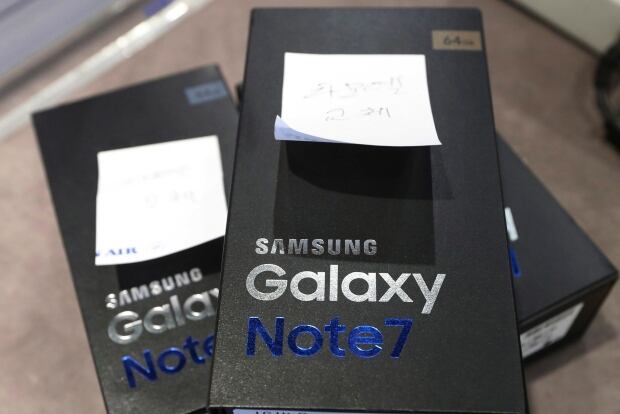
Boasting some of the largest wraparound screens ever made, the S8 is the South Korean tech giant's first new premium phone since the Note 7 debacle in October, which wiped out $5.48 billion US of profit and helped Apple overtake Samsung as the world's top smartphone maker in the fourth quarter.
Two versions of the Galaxy S8, code-named Dream internally, were launched at a media event in New York on Wednesday, with 6.2-inch (15.75 cm) and 5.8-inch (14.75 cm) curved screens --— the largest to date for Samsung's premium smartphones.
Samsung-Return of the Note 7
Samsung has a lot riding on its new Galaxy S8 smartphone, introduced Wednesday, after losing credibility with its fire-prone Note 7, which it had to recall twice. (Lee Jin-man/Associated Press)
The phones, which will go on sale on April 21, are slightly longer but comparable in width to their predecessors as Samsung has eliminated nearly all of the bezel borders around the face to maximize the screen surface area.
The S8 features Samsung's new artificial intelligence service, Bixby, with functions including a voice-commanded assistant system similar to Apple's Siri. There is also a new facial recognition application that lets users unlock their phones by looking at them.

Image revival

Samsung is hoping the design update and the new features will be enough to revive sales in a year Apple is expected to introduce major changes to its iPhones for their 10th anniversary, including the very curved screens that have become staples of the Galaxy brand.
  • Samsung's flammable phone scandal may cause consumers to hang up on them forever
The S8 is also crucial for Samsung's image as a maker of reliable mobile devices. The self-combusting Galaxy Note 7s had to be scrapped in October just two months after their launch, and a failed attempt to recall the Note 7s in September was particularly damaging, investors and analysts say, leading to questions about the firm's credibility.
Samsung responded by implementing new battery safety measures after an internal investigation identified battery problems from two different suppliers as the cause of the Note 7's problems.
Still, some analysts say consumers may be wary of potential safety problems with the S8.
"Initial sales of the S8 may appear slow compared to what was typical for previous model releases," said Lux Research analyst Christopher Robinson. "In other words, smaller initial sales spike."
Samsung's early marketing of the S8 has eschewed the safety issue, which brand experts say is an attempt to avoid reminding consumers of the images of burnt Note 7s that spread around the world late last year.

8-point safety check

In the immediate run-up to the launch, Samsung made little mention of safety.
But in January the company announced a comprehensive safety plan after concluding that faulty batteries from two suppliers caused some Note 7s to catch fire.
  • Samsung blames Galaxy Note 7 smartphone fires on battery design, manufacturing
It now has an eight-point safety check protocol that includes x-raying the batteries. And, at the design level, phones have more room to properly house the battery. Such steps have been reflected in the S8's development, the company said.
Executives have said there will be no repeat of the Note 7 debacle, and one person familiar with the matter told Reuters the S8 launch was pushed back to ensure it is safe to use.
"The additional measures Samsung has taken should certainly improve battery safety and durability," said Lewis Larsen, president of Chicago-based battery technology consultancy Lattice Energy. "These are most definitely not just cosmetic steps 'for show.'"
Samsungs Next Phone
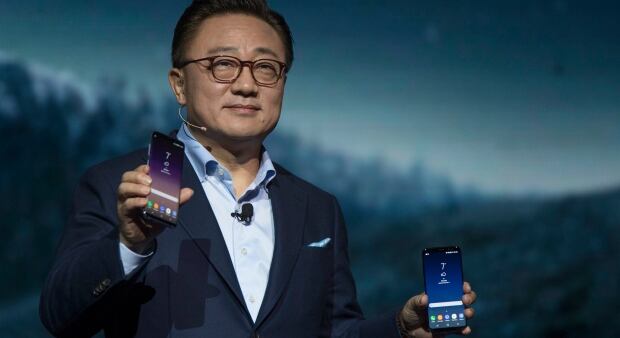
Koh Dong-jin, president of Samsung's mobile communications business, shows the Galaxy S8 and S8 Plus during a news conference, Wednesday, March 29, 2017, in New York. (Mary Altaffer/Associated Press)
The company has also this month put a long-time mobile executive in charge of a new product quality improvement office, and affiliate Samsung SDI has invested 150 billion won (around $180 million Cdn) on improving battery safety.

Note 7 returns, too

Samsung recalled the Note 7 last September to replace faulty Samsung SDI batteries, but replacement batteries from Amperex Technology Ltd. also proved faulty due to different problems — an embarrassment for a company that prides itself on product quality, analysts say. The Note 7 was eventually pulled from the market in October.
  • Samsung to sell refurbished Galaxy Note 7s after battery fire recall
  • Samsung Galaxy Note 7 banned from Canadian and U.S. flights
The company said earlier this week it plans to sell refurbished versions of the Note 7 smartphones, equipped with new batteries that have gone through the new safety measures.
And safety is still on the minds of potential buyers of the new phone.
In one poll asking people what features they were looking forward to most in the S8, one Twitter user quipped: "A non exploding phone."
And at last week's annual shareholder meeting, one young boy stood up and asked Samsung to double down on safety. "In future, even if it takes time, I hope there will be no incidents like the Galaxy Note 7 explosions," he said.
Some analysts expect the S8 to outsell the Galaxy S7, which was Samsung's best seller in its first year from launch.
Others, though, say consumers may prefer to wait a few months before buying, just to be sure the new phones are safe.  
excerpt to cbcnews